Black Flying Foxes Roosting in a Hoop Pine, Walkerston, Queensland Leesa Baldwin
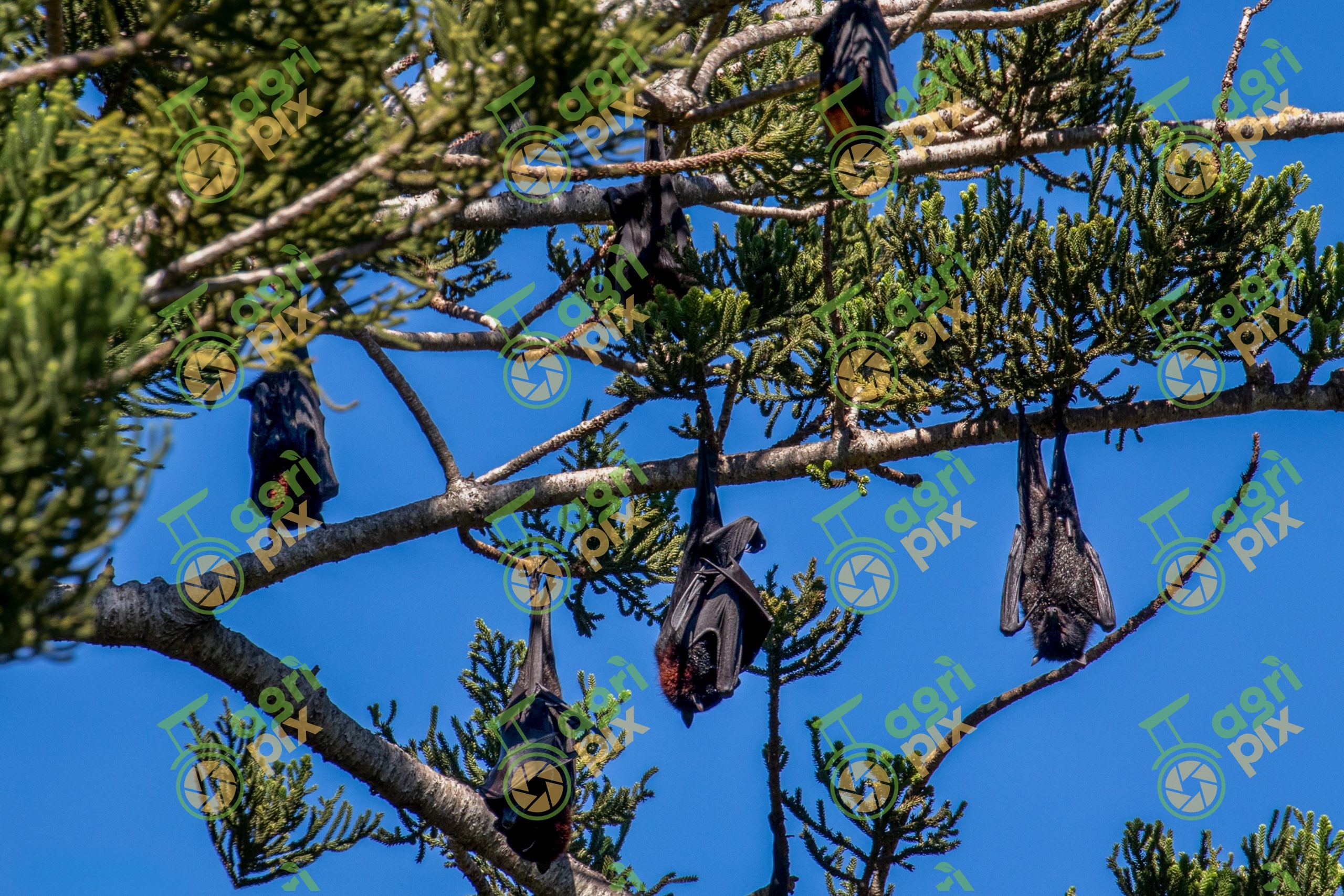
A colony of Black Flying Foxes (Pteropus alecto) hangs quietly from the branches of a native Hoop Pine (Araucaria cunninghamii) under a brilliant blue Queensland sky near Walkerston. Wrapped in their dark leathery wings, the flying foxes roost upside down among the tree's distinctive whorled branches and dense needle-like foliage, conserving energy during the day before emerging at dusk to feed. Several individuals display glimpses of their characteristic rusty-brown neck fur, contrasting with their otherwise black bodies. The geometric branching pattern of the Hoop Pine provides secure roosting sites while creating a striking natural composition. This image highlights the fascinating behaviour of one of Australia's largest native bats and the important relationship between flying foxes and the trees that provide essential daytime shelter.
Walkerston, near Mackay in central Queensland, supports important habitat for Black Flying Foxes through its mix of remnant forests, riparian vegetation and urban green spaces. Black Flying Foxes are vital pollinators and long-distance seed dispersers for many native Australian trees, including eucalypts and rainforest species, making them indispensable contributors to the health and regeneration of Queensland's ecosystems.