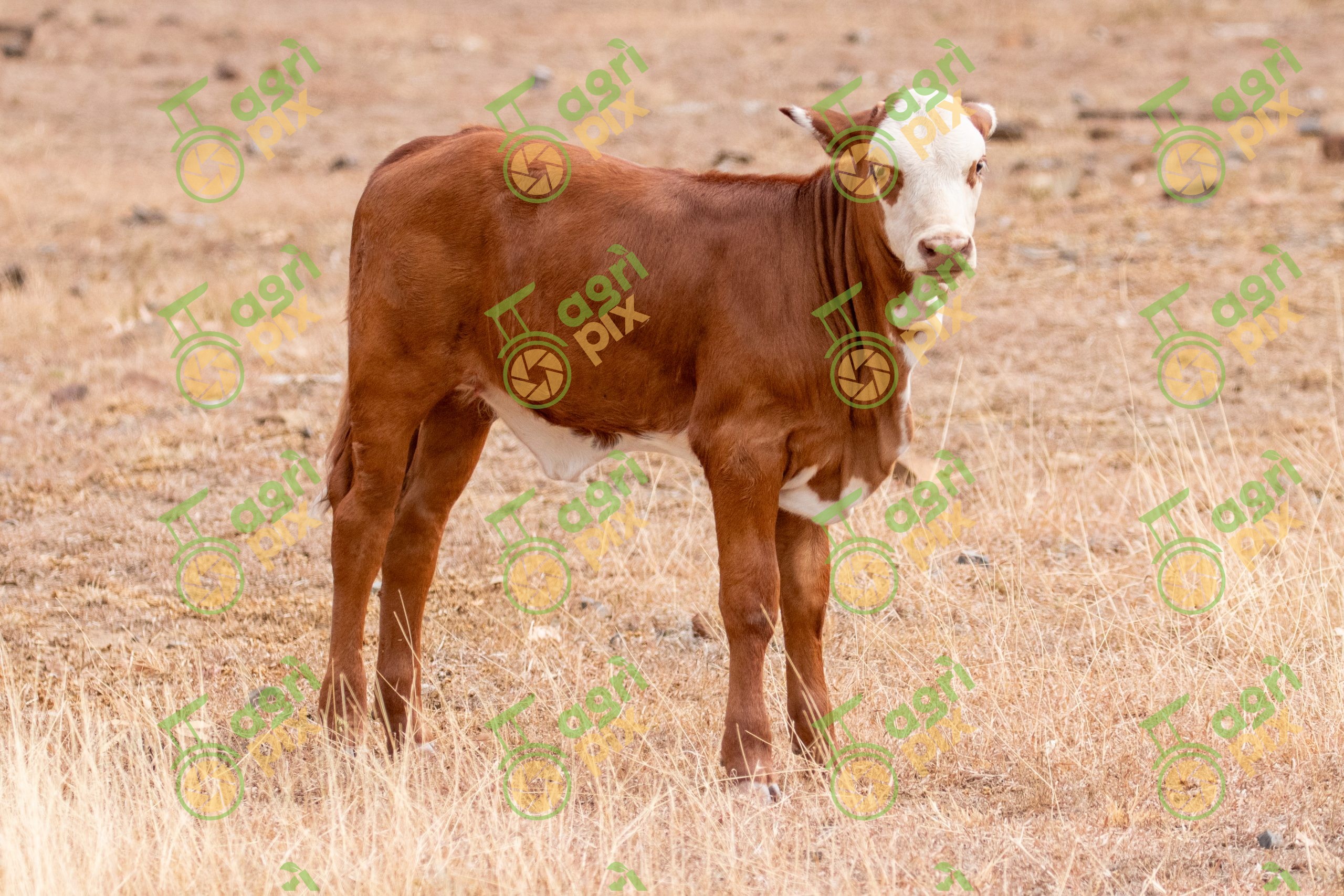
A Hereford calf Leesa Baldwin
A young Hereford calf stands quietly in a dry Queensland paddock, its distinctive white face and rich red-brown coat immediately identifying one of Australia's most widely recognised beef cattle breeds. The calf's curious expression and upright stance suggest a moment of cautious interest as it watches activity nearby. Fine details in the coat, developing muscle structure and youthful proportions highlight its early stage of growth, while the pale, sun-dried grasses beneath its feet reflect the conditions commonly experienced across many grazing regions of inland Queensland. The image captures both the resilience and adaptability of beef cattle raised in Australia's challenging pastoral environments. Young calves such as this represent the next generation of livestock that will contribute to the nation's important beef industry.
Queensland is Australia's largest beef-producing state, supporting millions of cattle livestock across extensive grazing properties ranging from coastal regions to the vast inland rangelands. Hereford cattle are valued for their hardiness, calm temperament, fertility and ability to efficiently convert pasture into high-quality beef. Their adaptability has made them a popular choice for commercial and stud operations throughout Australia.
Cattle production has played a significant role in shaping Queensland's rural communities, regional economies and agricultural identity for more than 150 years, making scenes such as this a familiar part of the state's pastoral landscape.