
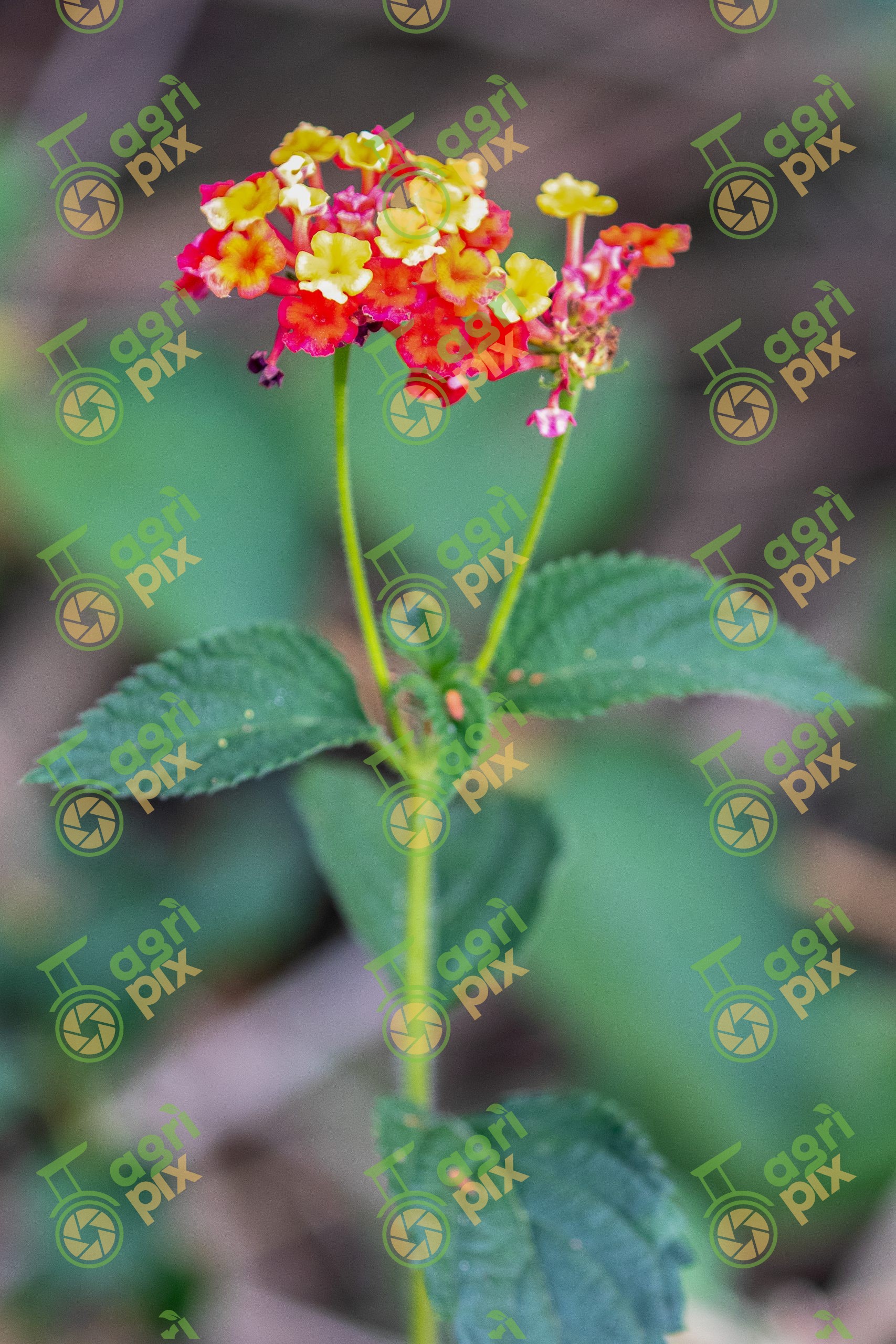
Lantana (Lantana camara) Leesa Baldwin
A close-up photograph highlights the vibrant flower heads of Lantana (Lantana camara), displaying a striking combination of red, orange, yellow and pink florets above rough-textured green leaves. The colourful flower clusters contrast beautifully against the softly blurred background, while the plant's serrated leaves and slender stems are shown in sharp detail. Its bright blooms are highly attractive to bees, butterflies and other pollinating insects, contributing to its success as one of the world's most invasive flowering plants. The shallow depth of field draws attention to the intricate structure of the flower heads, creating an attractive botanical image that contrasts with the species' significant environmental impact in Australia.
Originally introduced as an ornamental garden plant during the nineteenth century, lantana is now recognised as a Weed of National Significance (WoNS) in Australia. It has spread across millions of hectares, particularly along the east coast, where dense infestations outcompete native vegetation, reduce biodiversity and restrict livestock access. Lantana is toxic to cattle and other grazing animals and costs Australian agriculture millions of dollars each year through reduced productivity and ongoing weed management programs.