
Beehive – honey harvest Leesa Baldwin
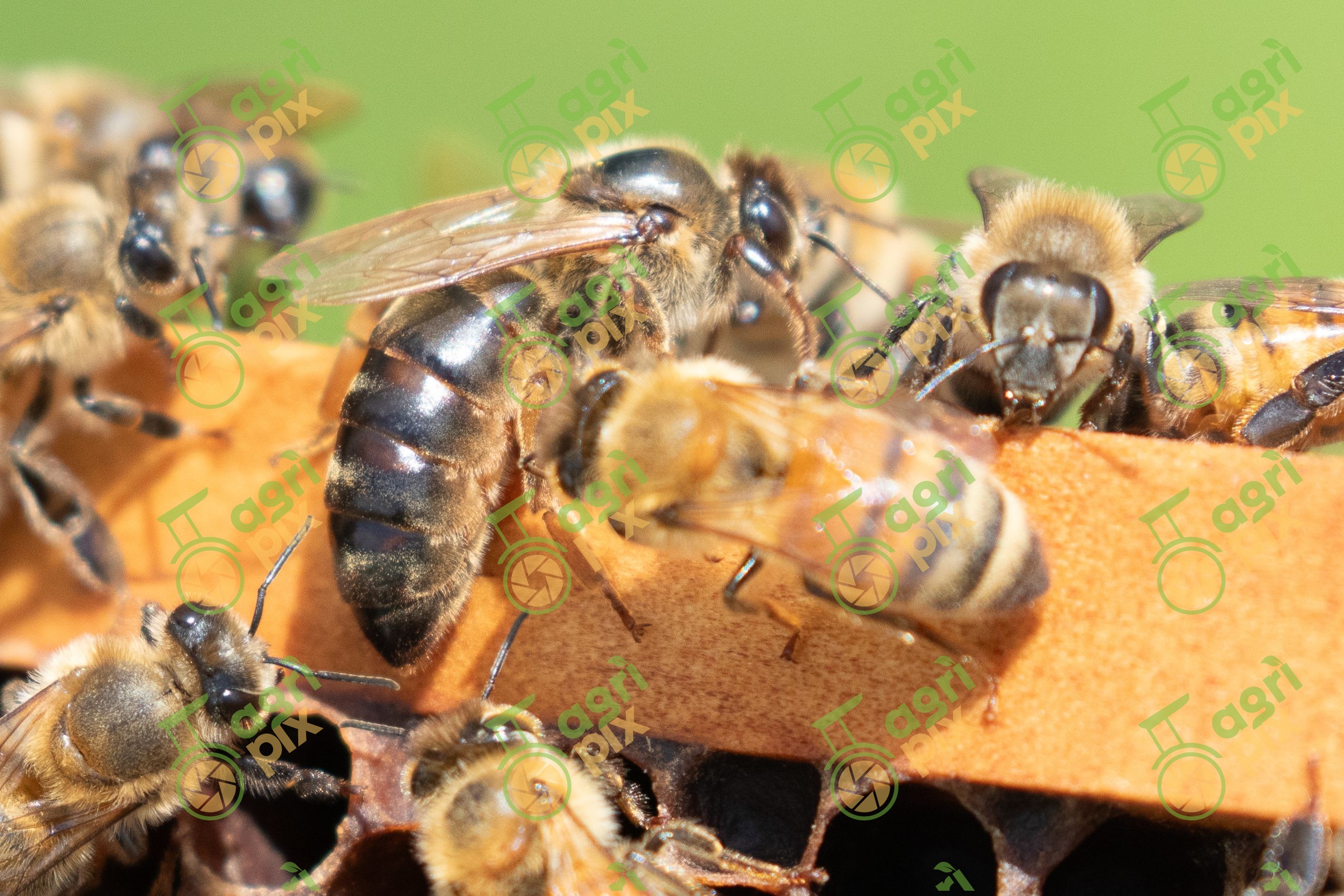
A close-up view of European honey bees (Apis mellifera) actively tending their hive in St Lawrence, Queensland, reveals the remarkable complexity and organisation of one of nature’s most essential pollinators. Worker bees move across the honeycomb structure, maintaining brood cells, caring for developing larvae, and contributing to the ongoing productivity of the colony. The intricate hexagonal wax comb provides a highly efficient structure for raising young, storing honey, and supporting the hive’s daily operations.
This detailed macro image highlights the fine textures of the bees’ wings, bodies, and the carefully constructed comb, offering insight into the essential role bees play in both agricultural systems and natural ecosystems. In regional Queensland, honey bees are critically important for pollination across horticulture, crop production, and biodiversity support. Captured in St Lawrence, this image reflects the health, labour, and natural behaviour of a functioning hive, making it ideal for themes related to apiculture, pollination, sustainable agriculture, environmental health, and Australian rural industry.