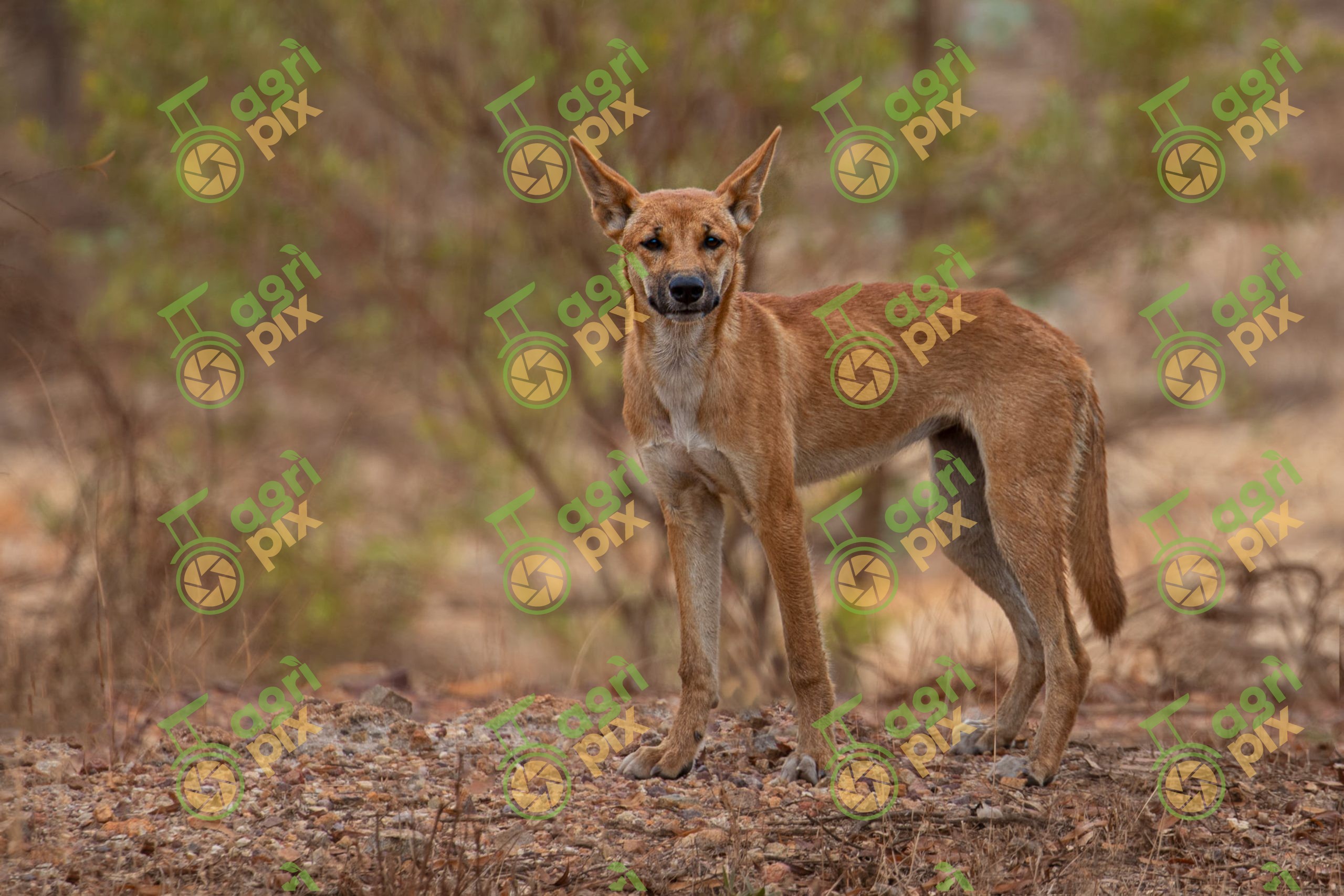
Wild Dingo at Lake Elphinstone, Queensland Leesa Baldwin
A wild dingo (Canis dingo) stands alert in the dry woodland surrounding Lake Elphinstone in central Queensland. Its rich sandy coat blends naturally with the rocky ground and muted vegetation, while upright ears, keen amber eyes and a confident stance reveal the awareness and intelligence of Australia's largest native terrestrial predator. The softly blurred background draws attention to the dingo's lean, athletic build, long legs and bushy tail, all adaptations that enable it to travel vast distances and hunt efficiently across a variety of Australian landscapes. The intimate portrait captures the quiet vigilance of this iconic animal, reflecting both its resilience and its ability to thrive in harsh environments.
Lake Elphinstone lies within Queensland's dry woodland and grazing country, where dingoes remain an important part of the natural ecosystem. As Australia's apex terrestrial predator, dingoes help regulate populations of kangaroos, wallabies and feral animals, contributing to ecological balance and biodiversity. At the same time, they can prey on sheep and calves, leading to ongoing management in some rural and pastoral areas. This dual role highlights the complex relationship between dingo conservation, ecosystem health and livestock production across Australia.
- Date: 16/04/2020
- Location: Lake Elphinstone
- Region: Central Highlands
- Details: A Dingo
- Pasture: Natural
- Irrigation: Array