A New-Holland honeyeater perched Robert Frew
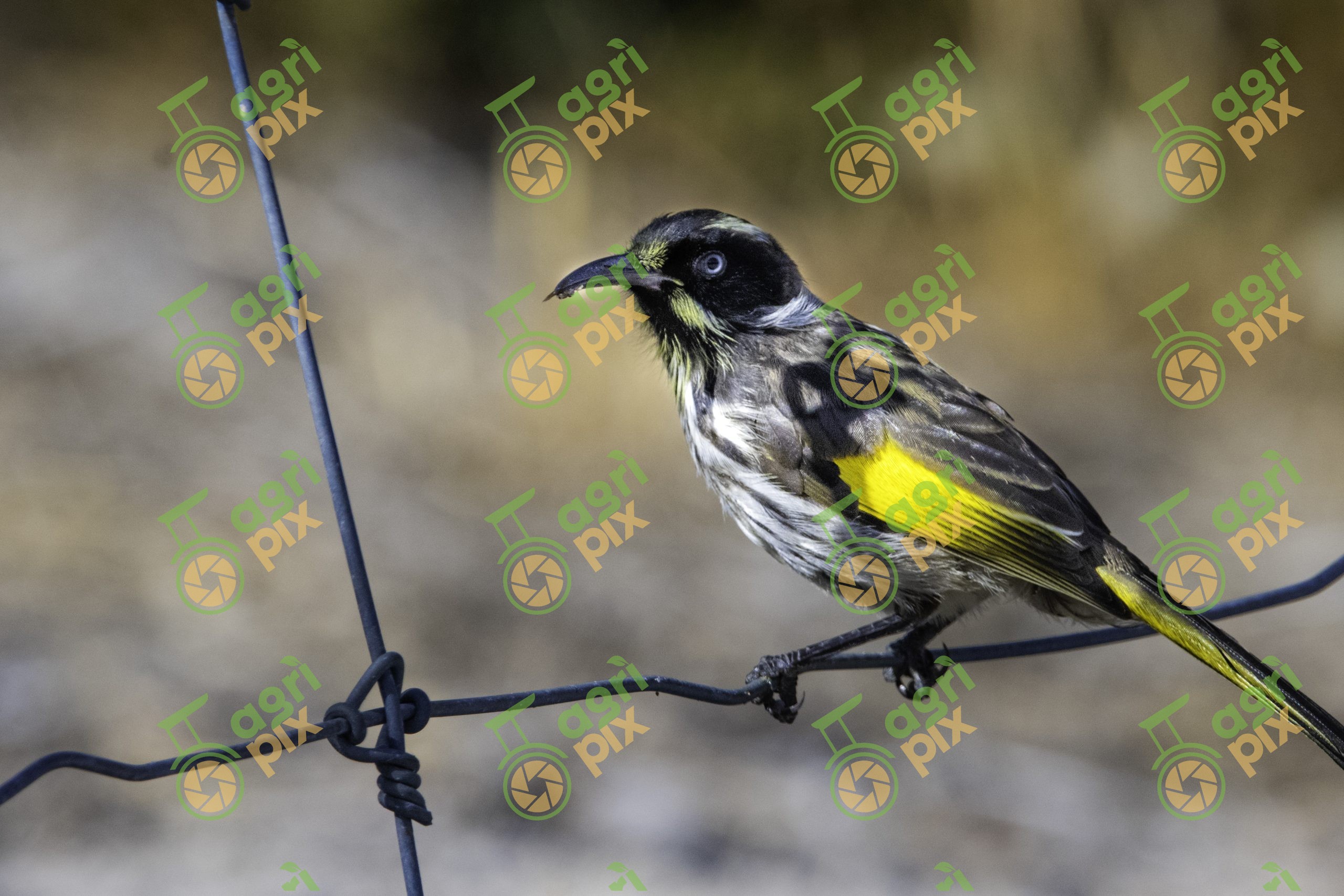
A New Holland Honeyeater (Phylidonyris novaehollandiae) perches alertly on a wire fence in Cape Arid National Park, in SW WA. Its distinctive black, white and yellow plumage standing out against a softly blurred natural backdrop. The bird's pale blue eye, white facial markings and bright yellow wing panel are striking features of one of southern Australia's most recognisable honeyeaters. Its slender, curved bill is perfectly adapted for feeding on nectar from flowering shrubs and trees, although it also supplements its diet with insects and other small invertebrates. The close-up composition highlights the intricate feather patterns and the bird's attentive posture as it surveys its surroundings from the fence line.
Cape Arid National Park, located on Western Australia's south-eastern coast, is renowned for its diverse landscapes of coastal heathlands, granite peaks, sand dunes and pristine beaches. The park supports an exceptional range of birdlife, including honeyeaters, parrots, raptors and migratory shorebirds. The varied vegetation communities provide important feeding and nesting habitat, making Cape Arid one of Western Australia's most significant conservation areas and a rewarding destination for birdwatchers, photographers and nature enthusiasts.