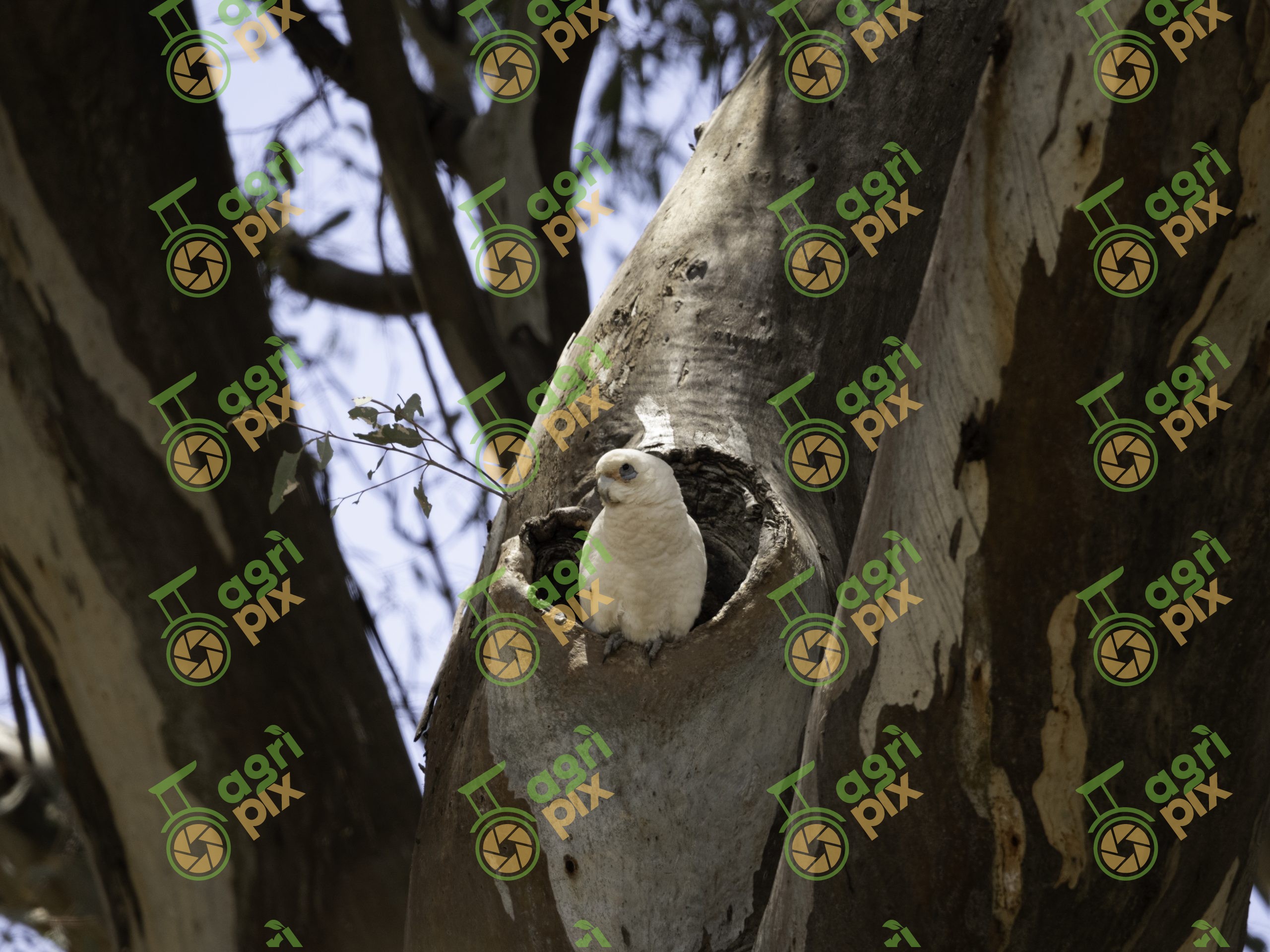
Corella in nest Robert Frew
A Little Corella (Cacatua sanguinea) peers from the entrance of a natural tree hollow high within the trunk of a mature eucalypt in South Australia's Flinders Ranges. Framed by smooth bark and weathered wood, the white cockatoo sits quietly within its nesting site, highlighting the importance of hollow-bearing trees for native Australian wildlife. The contrast between the bird's bright plumage and the muted tones of the eucalypt creates a striking image, while the surrounding branches and textured bark provide a glimpse into its natural habitat. Tree hollows such as this can take many decades, and sometimes centuries, to develop, making them critical breeding sites for a wide range of birds and mammals.
The Flinders Ranges is one of Australia's most significant natural landscapes, renowned for its rugged mountain ranges, ancient geology and rich biodiversity. The region supports a variety of birdlife, including parrots, cockatoos, raptors and many arid-zone species adapted to the harsh inland environment.
The Flinders Ranges lies within the traditional Country of the Adnyamathanha people whose name translates to "hill or rock people." Their connection to these mountains, valleys and ecosystems extends back thousands of years and remains an important part of the region's cultural heritage.