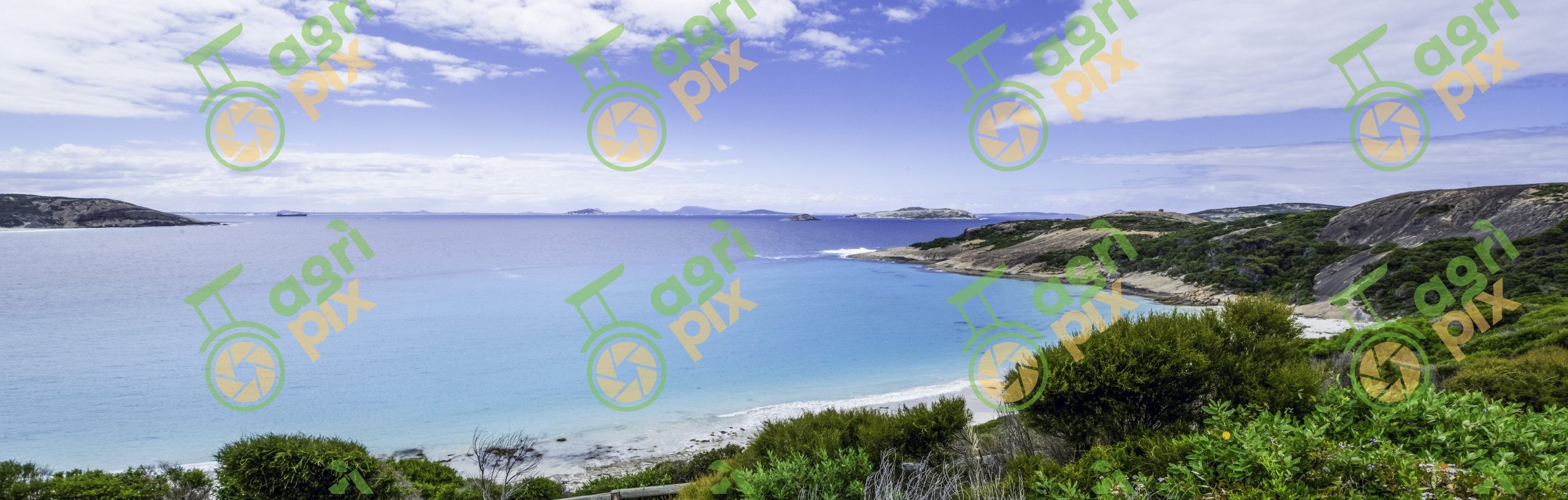
King George Sound Robert Frew
King George Sound, near Albany on Western Australia's south coast, is a place of exceptional natural beauty and deep cultural and historical significance. In this image, calm turquoise waters meet a pristine shoreline framed by granite headlands and coastal vegetation, while distant islands stretch across the horizon. Long before European settlement, the sound formed part of the traditional lands of the Menang Noongar people, who lived in harmony with the changing seasons and relied on the rich marine and estuarine resources of the region. The surrounding landscape and waters are woven into Noongar creation stories, including those of the Mammang, or southern right whale, and the Waugal, the rainbow serpent.
King George Sound also occupies an important place in Australian history. When Major Edmund Lockyer arrived aboard the Amity in 1826 to establish a British garrison, the Menang people were already well established in the area. Early interactions included cooperation, friendship and cultural exchange, with Menang leader Mokare playing a vital role in helping settlers understand the local environment. In later years, whalers and sealers were drawn to the region's abundant marine resources, leading to exploitation and increasing tensions along the frontier. Today, the sound is renowned for boating, fishing, kayaking and whale watching, with dolphins, Australian sea lions, humpback whales and southern right whales regularly seen in its waters.