
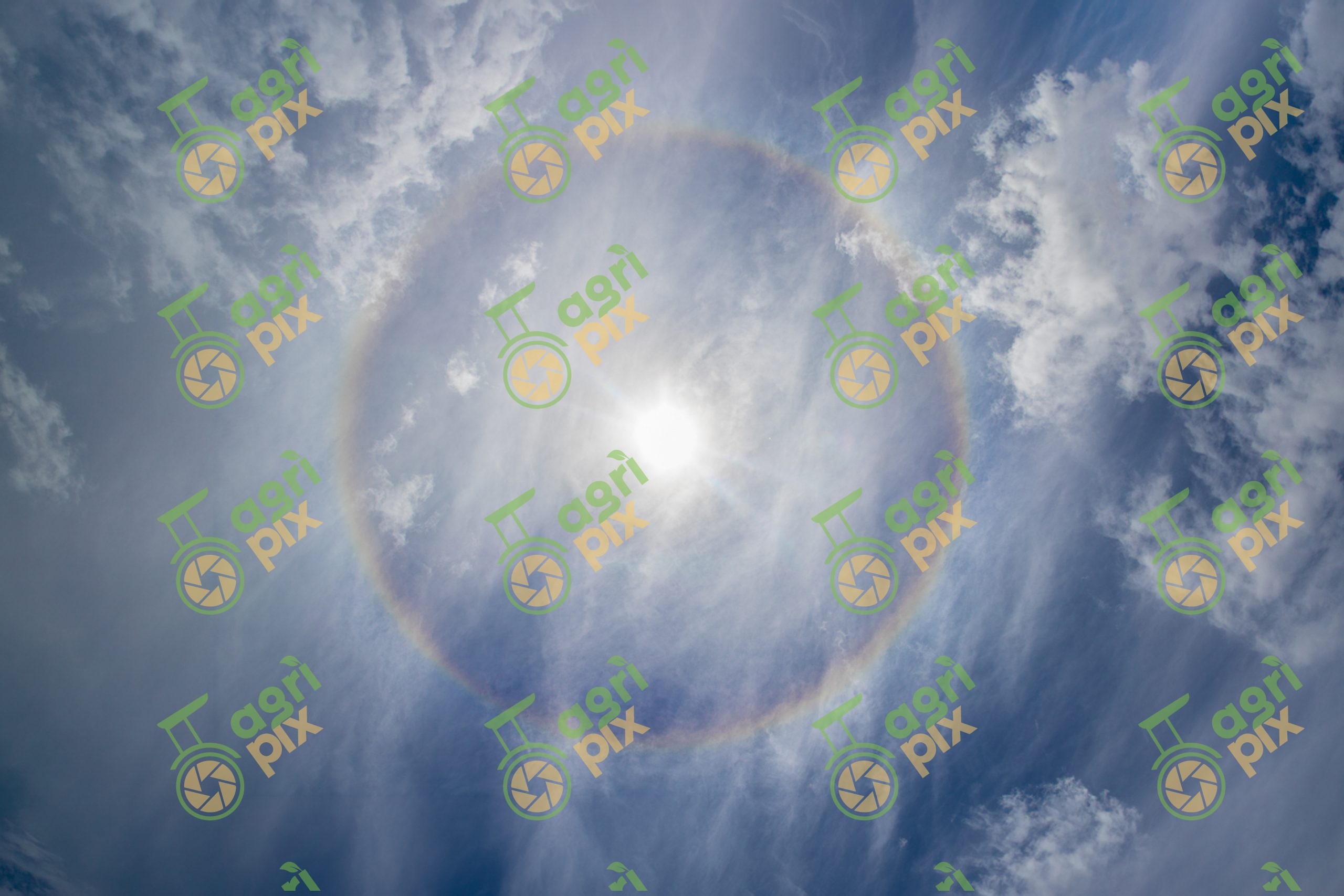
Sun halo (22-degree halo) – atmospheric optical phenomenon Leesa Baldwin
A striking 22-degree sun halo forms a near-perfect circle around the sun high above the Queensland countryside near Glendon. The delicate ring appears suspended within thin veils of cirrus cloud, creating a subtle spectrum of colours that encircles the bright solar disc. Wisps of high-altitude cloud stretch across the sky, enhancing the visual impact of this remarkable atmospheric phenomenon while softening the intensity of the sunlight. The image captures a relatively uncommon natural event that can easily go unnoticed despite its impressive scale. The halo is created when sunlight passes through millions of tiny hexagonal ice crystals suspended in high-level cirrus clouds, refracting the light at a characteristic angle of approximately 22 degrees. The result is one of the most recognisable optical displays in the atmosphere and a reminder of the complex interactions between sunlight, ice and the Earth's atmosphere.
Glendon is located in Queensland's Central Highlands region, an area characterised by expansive skies, open grazing country and diverse weather patterns. Such landscapes provide excellent opportunities for observing atmospheric phenomena, particularly during periods when high cloud systems move across the interior.
For generations, unusual sky events have attracted attention from people living and working on the land. Today, phenomena such as sun halos continue to fascinate observers, offering both a visual spectacle and insight into the atmospheric processes that influence weather across rural Australia.