Prickly Pear Lauren Bell
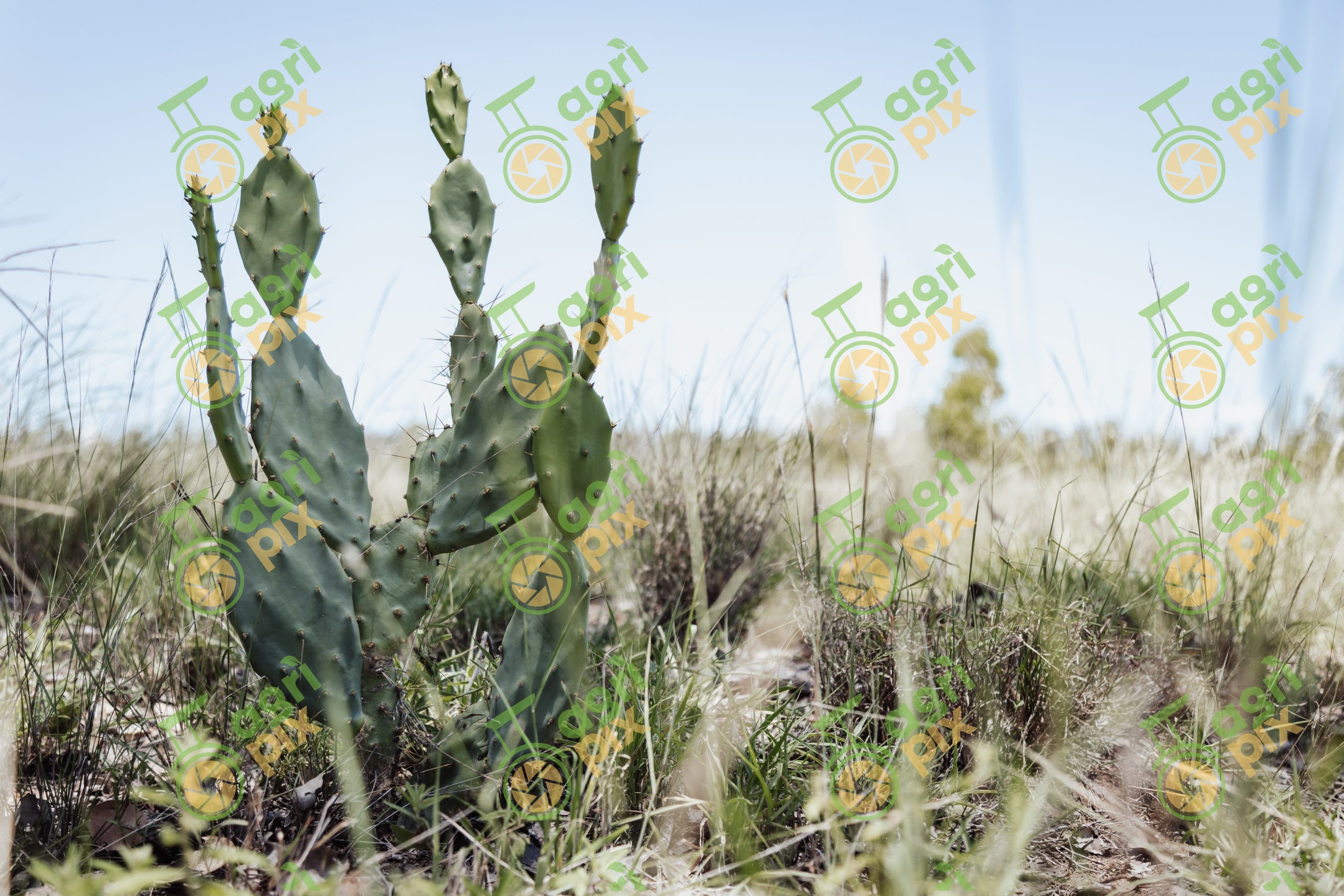
Prickly pear cactus rises above native grasses in a paddock on the Darling Downs, its fleshy green pads standing in sharp contrast to the surrounding vegetation. The low-angle perspective highlights the distinctive paddle-shaped segments covered with clusters of sharp spines, while the softly blurred background draws attention to the plant's invasive growth. Bright natural light and a clear blue sky create a deceptively peaceful rural scene, masking the significant environmental threat posed by this introduced species. The surrounding pasture and scattered trees provide important context, illustrating how prickly pear can establish itself among productive grazing land and native ecosystems. The image documents both the recognisable form of the cactus and the challenge it presents to land managers across inland Queensland.
The Darling Downs is one of Australia's premier agricultural regions, supporting extensive cattle grazing and broadacre cropping. Although biological control has dramatically reduced widespread infestations since the early twentieth century, prickly pear (Opuntia spp.) remains a declared invasive species in parts of Queensland. Ongoing monitoring and control are essential to prevent its spread, protect productive farmland, preserve native grasslands, and maintain healthy ecosystems throughout the region.