
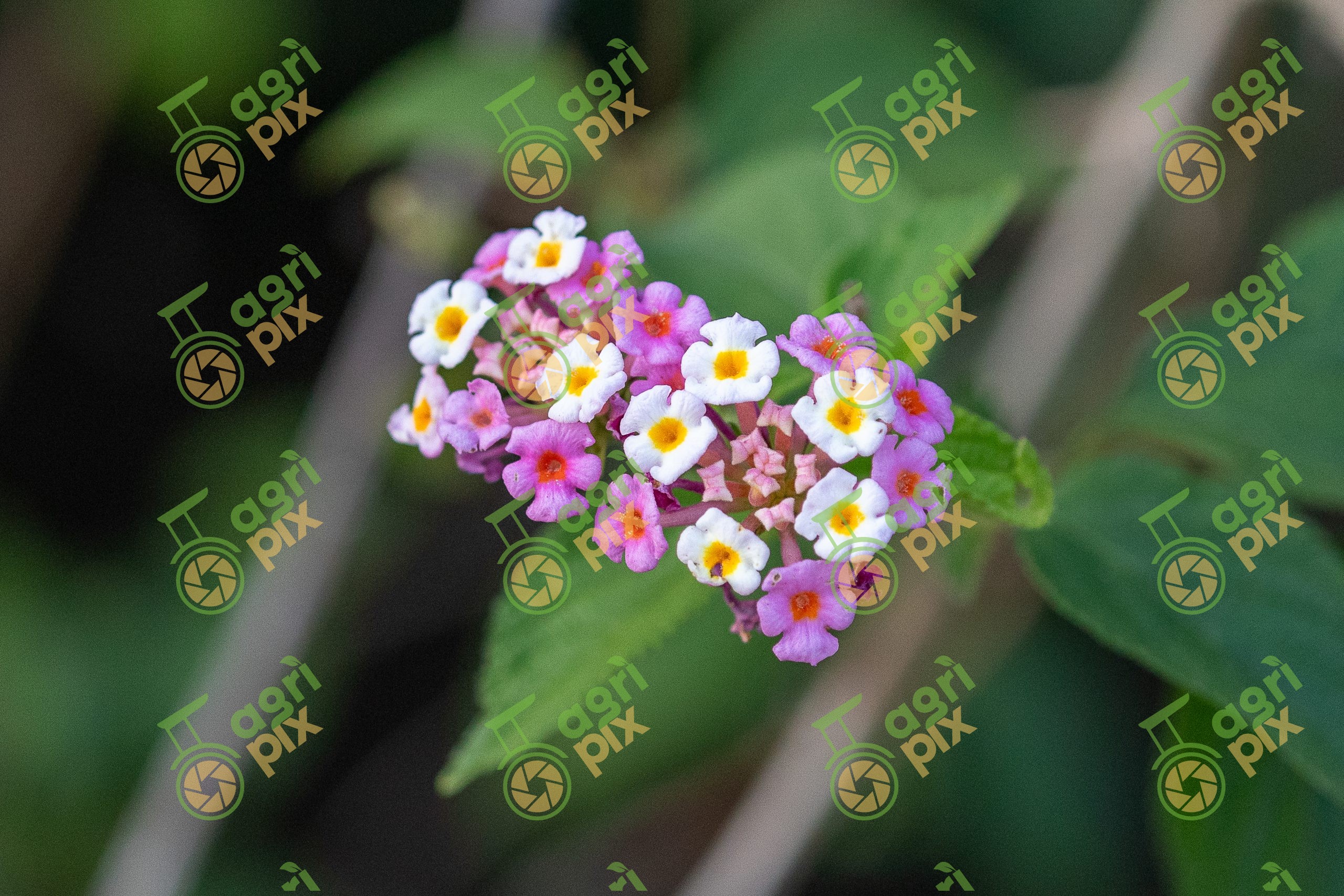
Lantana (Lantana camara) Leesa Baldwin
A close-up photograph showcases the colourful flower clusters of Lantana (Lantana camara), displaying a vibrant mix of pink and white florets surrounded by textured green leaves. The tightly packed flowers form rounded heads that are highly attractive to bees, butterflies and other nectar-feeding insects. A shallow depth of field isolates the flowering stem against a softly blurred background, emphasising the delicate petals, fine leaf veins and rich colours that have made lantana a popular ornamental garden plant. Despite its attractive appearance, this species has become one of Australia's most destructive environmental weeds, illustrating how introduced plants can spread far beyond their intended use and profoundly alter natural landscapes.
Introduced to Australia as an ornamental shrub during the nineteenth century, lantana is now recognised as a Weed of National Significance (WoNS). It has invaded millions of hectares across eastern Australia, forming dense thickets that outcompete native vegetation, reduce biodiversity and hinder livestock production. The plant is toxic to cattle and other grazing animals, contributes to millions of dollars in agricultural losses each year and remains one of Australia's most challenging invasive weed species to manage.