Short-beaked Echidna Foraging in Native Bushland Leesa Baldwin
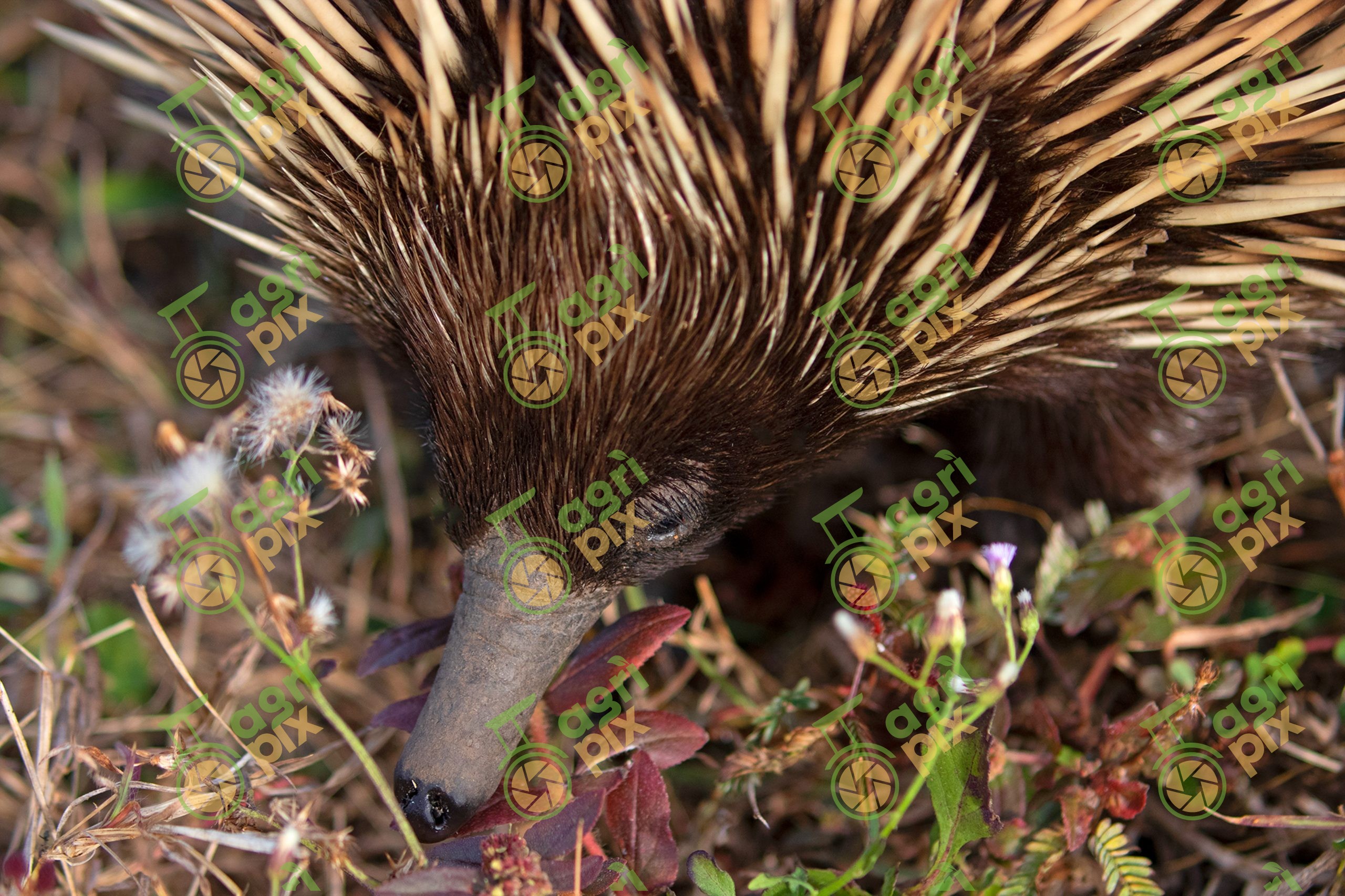
A close-up photograph captures a Short-beaked Echidna (Tachyglossus aculeatus) foraging among native ground vegetation in Australian bushland. The echidna's long, slender snout probes through leaf litter and low-growing plants in search of ants, termites and other invertebrates, while its dense covering of cream and brown spines provides protection from predators. Fine details of its coarse fur, powerful forelimbs and sharply defined spines are highlighted in the intimate composition, revealing the remarkable adaptations of one of Australia's most distinctive native mammals. Small wildflowers and colourful groundcover frame the scene, adding texture and colour while emphasising the echidna's natural habitat. The close perspective celebrates the quiet behaviour of this elusive monotreme as it goes about its daily search for food.
The Short-beaked Echidna is one of only five living monotreme species in the world, laying eggs rather than giving birth to live young. Found throughout mainland Australia and Tasmania, it occupies habitats ranging from forests and heathlands to arid woodlands and alpine regions. An important insectivore, the echidna helps regulate ant and termite populations while contributing to healthy ecosystems through its digging and foraging behaviour.