Slash pine tree Leesa Baldwin
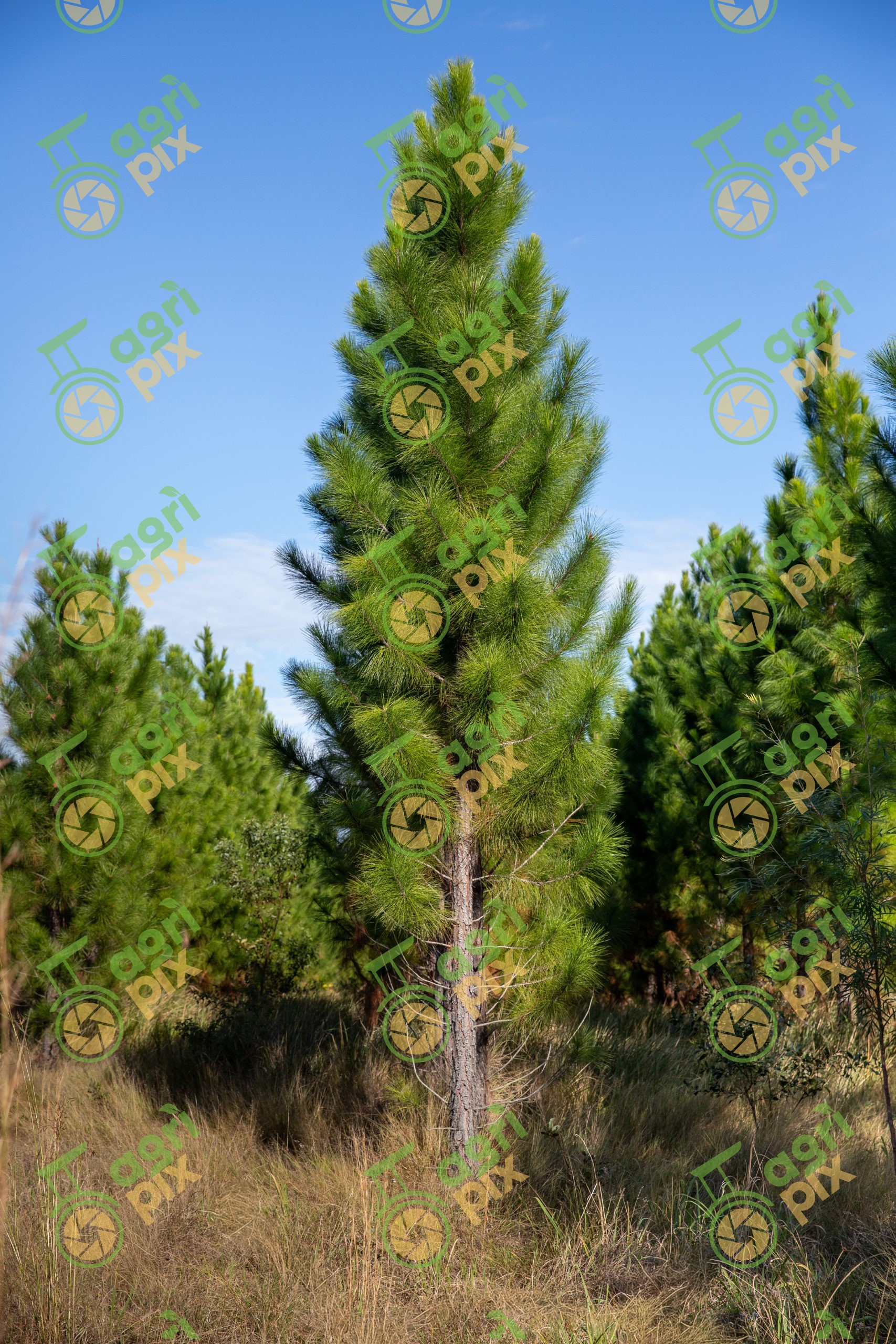
A young Slash Pine (Pinus elliottii) stands among a plantation of similarly aged trees in Queensland, its straight trunk and dense green needles reflecting the characteristics that have made this species an important component of Australia's commercial forestry industry. The tree's symmetrical form rises above the surrounding ground vegetation, while the soft light and clear blue sky highlight the healthy growth of the plantation. Long clusters of needles create a rich texture throughout the canopy, and the orderly spacing of the surrounding trees reveals the managed nature of the forest. The image captures a productive stage in the growth cycle of a plantation crop, where careful management supports timber production while maintaining forest health and sustainability.
Plantation forestry plays an important role in Queensland's renewable resources sector, supplying timber for construction, landscaping, packaging, paper products and a wide range of manufactured goods. Slash Pine, native to the south-eastern United States, was introduced to Australia because of its rapid growth, adaptability and suitability to local growing conditions. It is commonly planted in coastal and sub-coastal regions where climate and soils support strong growth rates.
Modern plantation forests contribute significantly to regional economies while reducing pressure on native forests for timber production. Managed sustainably, they provide renewable building materials, carbon storage, wildlife habitat and long-term employment opportunities for rural communities throughout Queensland.