
Australian Beef in 2026: what’s ahead in the pasture
Australian Beef in 2026: what’s ahead in the pasture
(Originally posted 13AUG26)
In our last beef blog, we saw how genetics provided a big boost to the early Aussie cattle industry.
The development of breeds better suited to harsh northern Aussie conditions was a windfall for production.
Meat and Livestock Australia (MLA) have forecast the 2026 national herd will remain over 30 million head, with 9.45 million to be slaughtered (the highest since 1978) producing a record 2.9 million tonnes of beef.
But a big question facing producers now is what will my pasture be looking like this growing season?
ABARES expects cattle prices to ease in 2026-27 and reports that variable rainfall is already limiting pasture prospects in parts of eastern Australia.
By now every cattle grower would have heard the Bureau of Meteorology’s (BOM) announcement that El Niño is firmly established and strengthening.
And they also would have heard the ominous prediction that this event could strengthen into a strong to very strong El Niño that could peak late-spring or summer.
While traditionally associated with drier conditions across eastern Australia, BOM stresses that even a strong El Niño doesn’t automatically produce equally severe impacts across the country.
And this matters because Australia doesn’t have one cattle-growing season.
Its beef regions can be broadly grouped into several different pasture-growing patterns, with considerable overlap between them.
The tropical north relies heavily on summer wet-season growth, while inland Queensland and northern NSW depend strongly on less reliable summer rainfall.
Temperate southeastern pastures often peak in spring, while Mediterranean regions of southwestern WA rely heavily on winter and spring growth.
Rainfall expectations affect carrying capacity, restocking demand and the pressure to turn cattle off.
A Queensland restocker contemplating summer pasture could face a completely different risk from a southern producer assessing winter feed.
“The impact of every El Niño is different,” says BOM, and historically some Australian regions can receive above-average rainfall even during an El Niño year.
Rather than treating the El Niño label as the forecast, independent forecaster Cynoptec’s long-range modelling identifies regional rainfall phases and timing up to eight months ahead.
Cynoptec argues that warm waters around Australia and other regional influences could produce important rainfall windows despite the powerful Pacific El Niño signal.
For producers, that’s potentially a more useful question than simply asking whether Australia will be dry: when will rain arrive in my region, and will it arrive during the months when my pasture can actually use it?
References:
Meat & Livestock Australia (MLA) — Australian Cattle Industry Projections 2026
ABARES — Agricultural Commodities: June Quarter 2026
ABARES — Weekly Update, 2 July 2026
Bureau of Meteorology — El Niño and Australia’s climate
Cynoptec — Long-range forecasting
AgriPix #AustralianBeef #BeefCattle #PastureManagement #ElNino
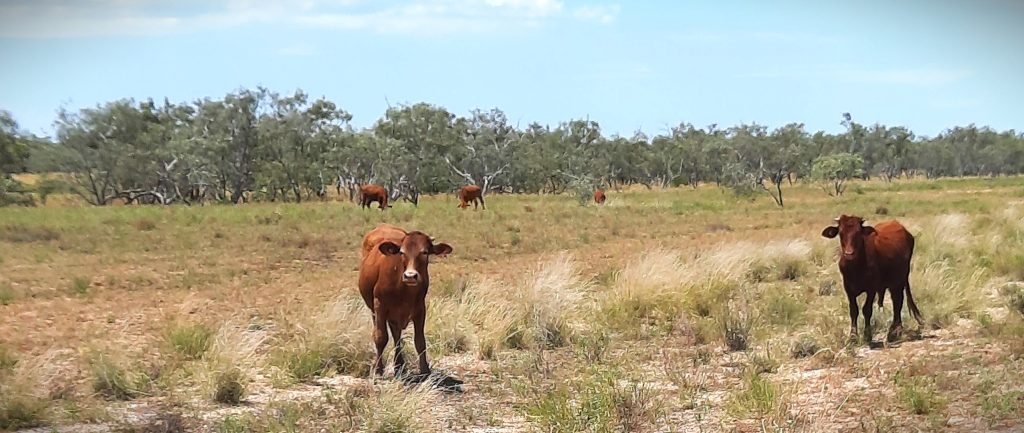
Image: AgriPix.com.au
We respect and honour Aboriginal and Torres Strait Islander Elders past, present and future. We acknowledge the stories, traditions and living cultures of Aboriginal and Torres Strait Islander peoples on this land and commit to building a brighter future together.
AgriPix® is a registered trademark of AgriPix Pty Ltd in Australia.