
Beef Production in Australia: vastly different landscapes supporting one industry
(Originally posted 12AUG26)
Today, Aussie beef production is one of our largest agricultural enterprises with a national herd of over 30 million head.
Fun fact: about 47% of the continent in 2026 is classified as grazing native vegetation used by cattle and sheep.
But back in early 19th Century the national herd was tiny by comparison and there was demand for pastoral expansion to grow settlements and build commercial opportunities.
So pastoralists began to spread out from NSW in search of good new grazing ground.
These cattle were nearly all European Bos taurus stock, like the red, white or roan Shorthorn and later the red-bodied white-faced Hereford.
Pastoralists needed to find more pasture and moved large numbers of cattle from NSW into Queensland’s Darling Downs, then pushed rapidly west and north from about 1840.
By the 1860s, Gregory Downs and Floraville stations were operating way up in the Gulf Country.
Roughly a quarter of the national herd was now in Queensland by 1870 and large stations were spreading into the NT, Gulf and Kimberley.
And they were still predominantly Bos taurus European breeds.
The conditions in these remote northern regions are vastly different, featuring drastic seasonal swings from the thirsty Dry to monsoonal flooding that brought new challenges the pastoralists’ European ancestors had never faced: heat, ticks, internal worms, drought and poor seasonal nutrition.
But the northern cattlemen persisted for decades trying to make their temperate European breeds fit the tropical environment.
Inevitably they figured out it was a better idea to adapt the cattle to the environment instead of adapting the environment to the cattle.
Enter the Bos indicus breeds.
The United States had faced similar challenges with European breeds and had experimented with Bos indicus breeds imported from India, developing the American Brahman.
A major turning point was when 18 American Brahman, nine bulls and nine cows, plus one Santa Gertrudis bull were brought to Queensland from Texas in 1933 in the first notable importation of the breed.
Scientific trials soon began on northern stations that demonstrated the Brahman genetics were better suited to northern conditions.
Further imports followed in the early 1950s and the Australian Brahman was developed over the next few decades.
Meanwhile, the CSIRO experimented with a tropical breeding program at Belmont, near Rockhampton, and eventually developed the Belmont Red by combining genetics from Afrikaner, Hereford and Shorthorn breeds.
Over the next few decades, Brahman, Brahman-derived and Belmont Red cattle increasingly transformed northern cattle production into the profitable industry it is today.
This is a story of a remarkable transformation: how over decades, Brahman, Brahman-derived and Belmont Red cattle helped transform the productivity of northern cattle production.
It tells how they developed cattle well-suited to the vastly different grazing country from north to south and set the foundations of the Australian beef industry, now one of the world’s largest beef exporters.
References:
ABARES — Snapshot of Australian Agriculture 2026
Meat & Livestock Australia — 2026 Cattle Industry Projections
CSIRO — Cattle for the Tropics
Australian Brahman Breeders’ Association — Brahman History
Images:
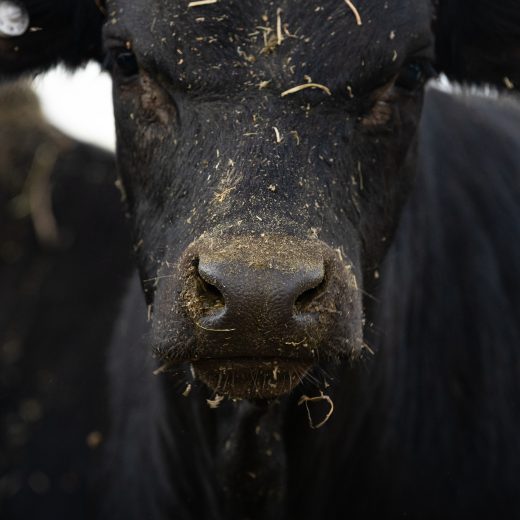
Black Angus cow – Lauren Bell
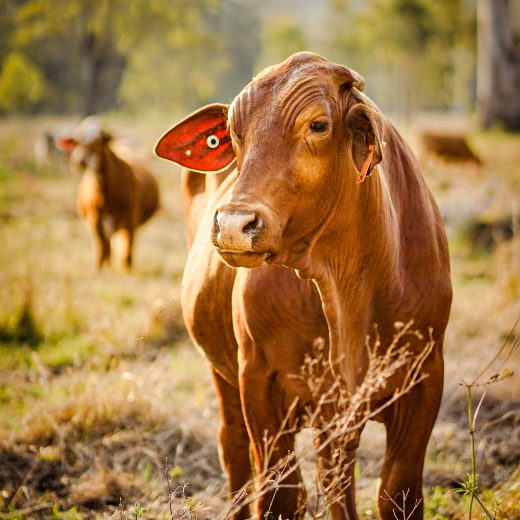
Red Brahman-cross calf – Katie O’brien
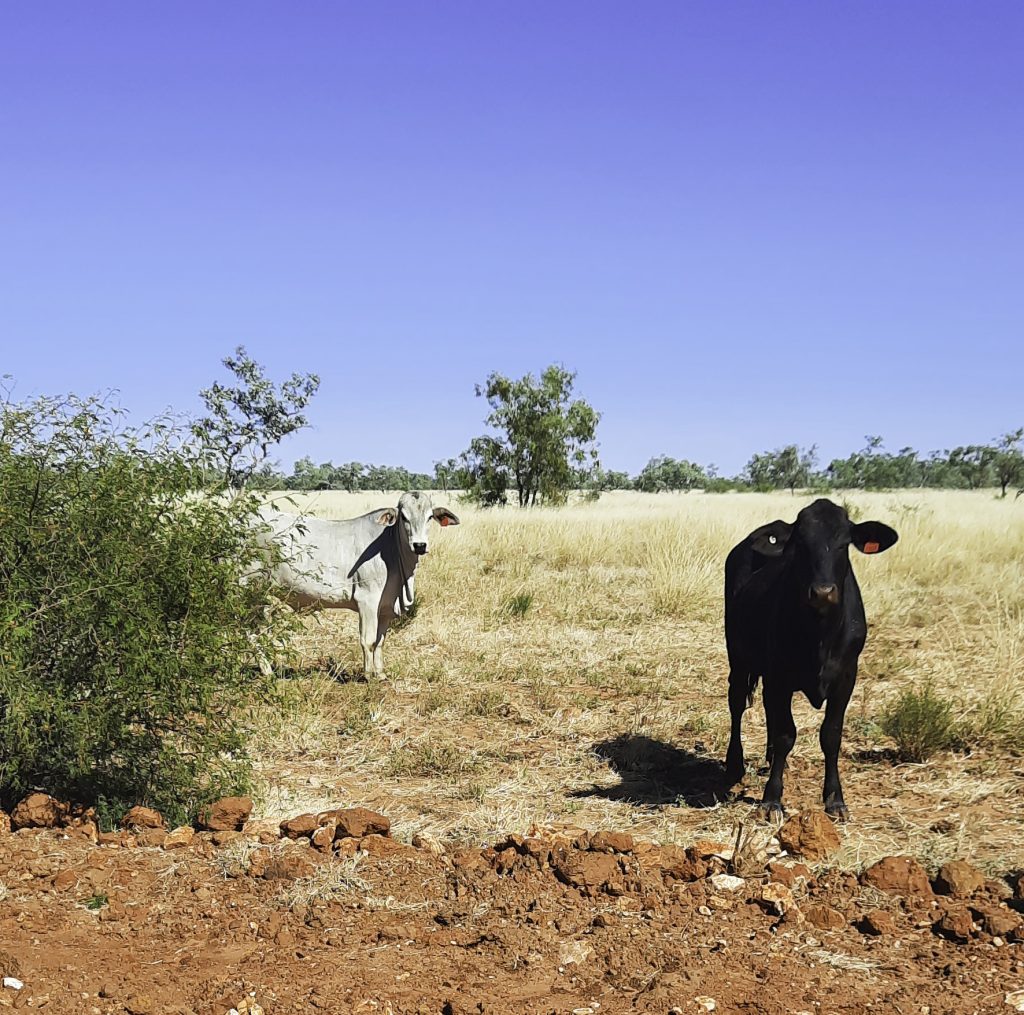
Outback Queensland cattle – AgriPix
We respect and honour Aboriginal and Torres Strait Islander Elders past, present and future. We acknowledge the stories, traditions and living cultures of Aboriginal and Torres Strait Islander peoples on this land and commit to building a brighter future together.
AgriPix® is a registered trademark of AgriPix Pty Ltd in Australia.