
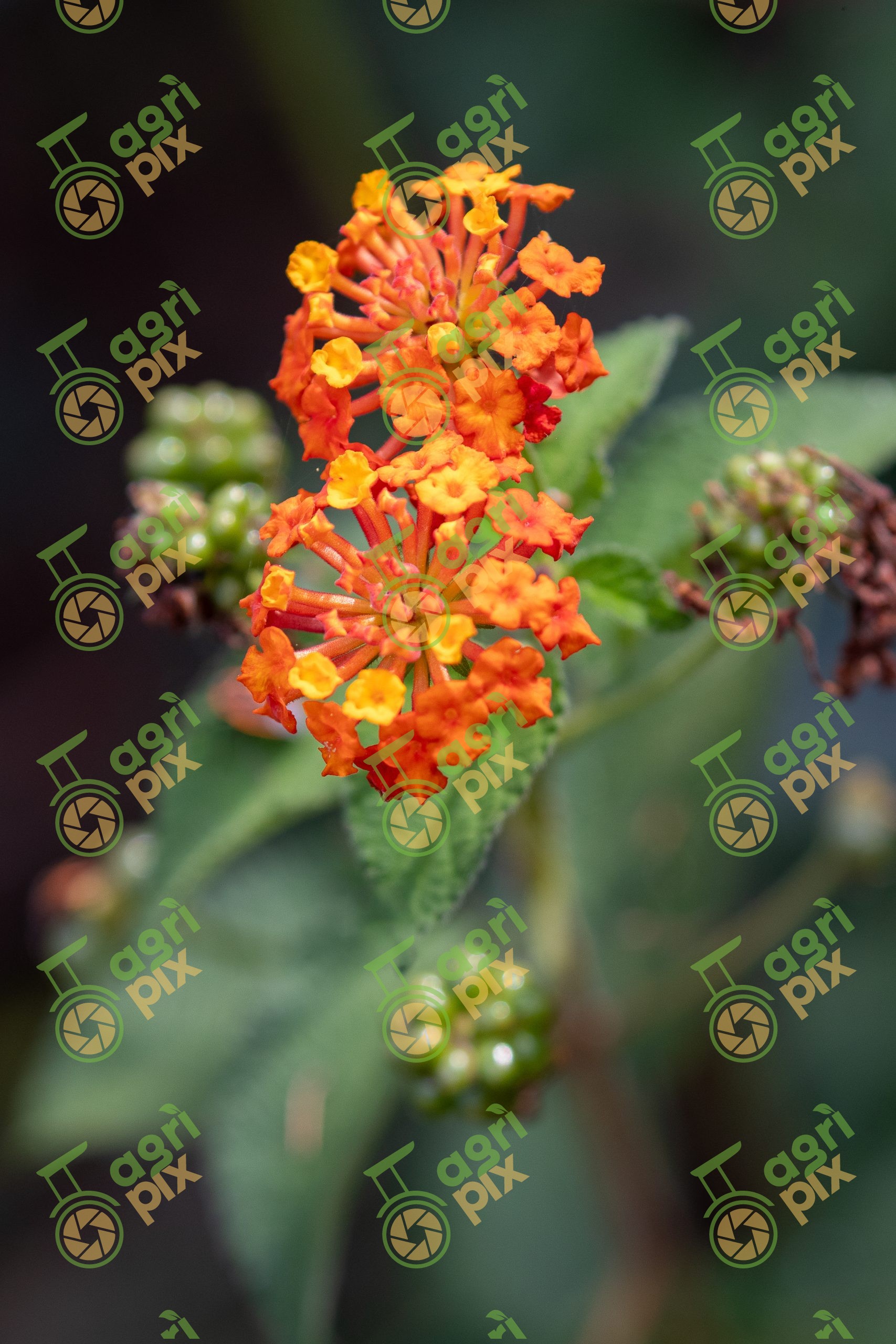
Lantana (Lantana camara) – orange flowers Leesa Baldwin
A close-up photograph captures vibrant orange and golden-yellow flower clusters of lantana (Lantana camara) as they open among textured green foliage. The tightly packed tubular florets form rounded flower heads, while nearby green developing berries and spent flower clusters illustrate the plant's continuous flowering and fruiting cycle. A shallow depth of field isolates the colourful blooms against a softly blurred background, highlighting the intricate floral structure and vivid colours that originally made lantana a popular ornamental garden plant. Despite its visual appeal, this species has become one of Australia's most widespread invasive weeds, demonstrating how introduced ornamental plants can have significant long-term environmental and agricultural consequences.
Introduced to Australia during the nineteenth century as a garden ornamental, lantana is now listed as a Weed of National Significance (WoNS). It has spread across millions of hectares, particularly throughout eastern Australia, where it forms dense thickets that suppress native vegetation, reduce biodiversity and impede livestock movement. The plant is toxic to cattle and other grazing animals, causing substantial economic losses through reduced agricultural productivity and ongoing weed control efforts across rural Australia.