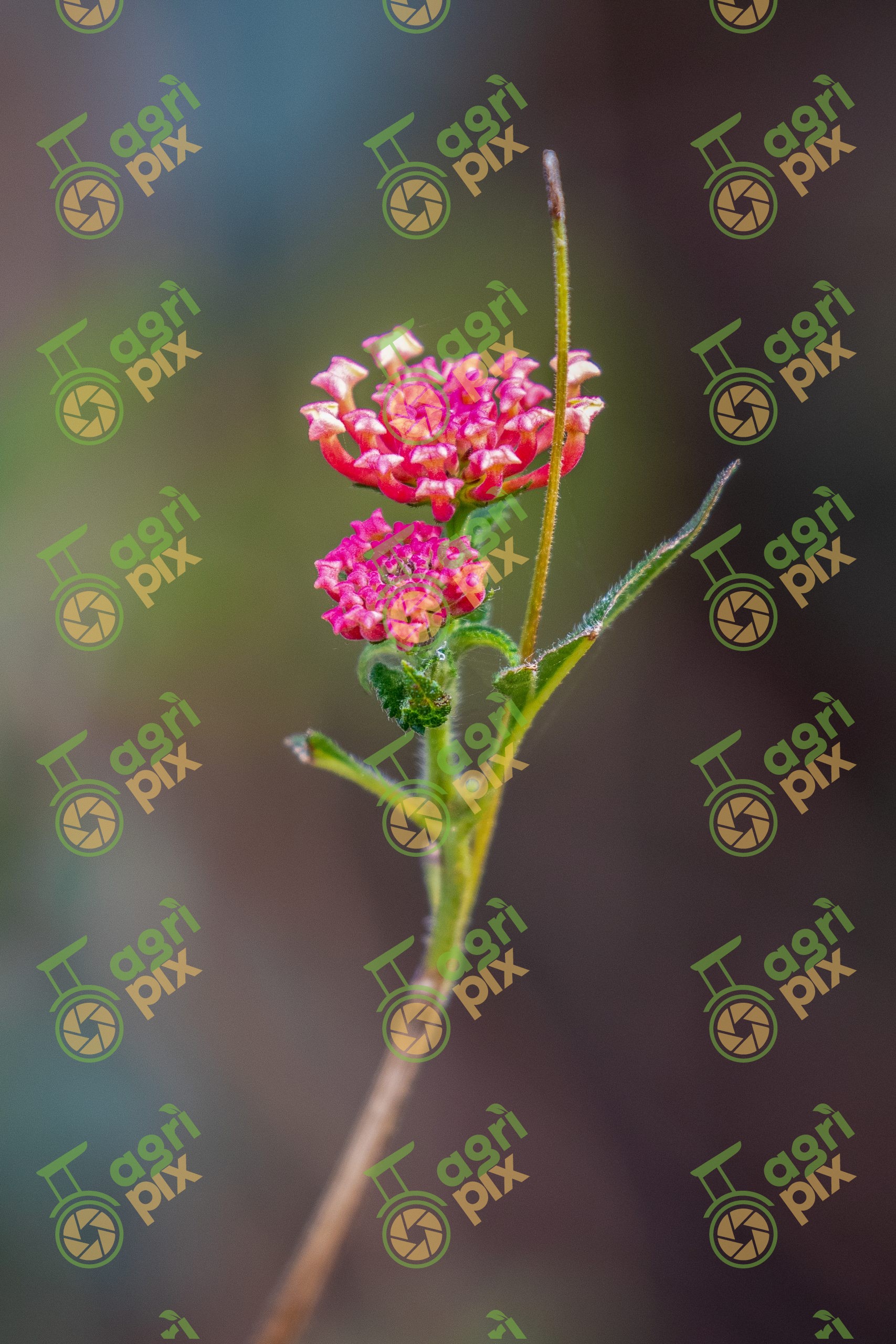
Lantana flower (Lantana camara) Leesa Baldwin
A close-up macro photograph captures a lantana (Lantana camara) flower head in the early stages of opening, with tightly packed pink florets beginning to unfurl into a delicate circular cluster. Fine hairs covering the stems and young leaves are clearly visible, while the softly blurred background isolates the developing flowers and highlights the intricate structure of the inflorescence. This early flowering stage illustrates the gradual progression of lantana blooms, which open from the outer edge towards the centre before eventually producing clusters of dark berries. Although visually attractive, the plant is one of Australia's most aggressive invasive weeds, demonstrating how ornamental species can become significant environmental threats when introduced beyond their natural range.
Originally introduced to Australia during the nineteenth century as a garden ornamental, lantana is now listed as a Weed of National Significance (WoNS). It has invaded millions of hectares, particularly along Australia's east coast, where dense infestations outcompete native vegetation, reduce biodiversity and hinder agricultural production. Toxic to cattle and other grazing animals, lantana continues to cost Australian agriculture millions of dollars annually through lost productivity and ongoing weed management.