Sugar cane bins Leesa Baldwin
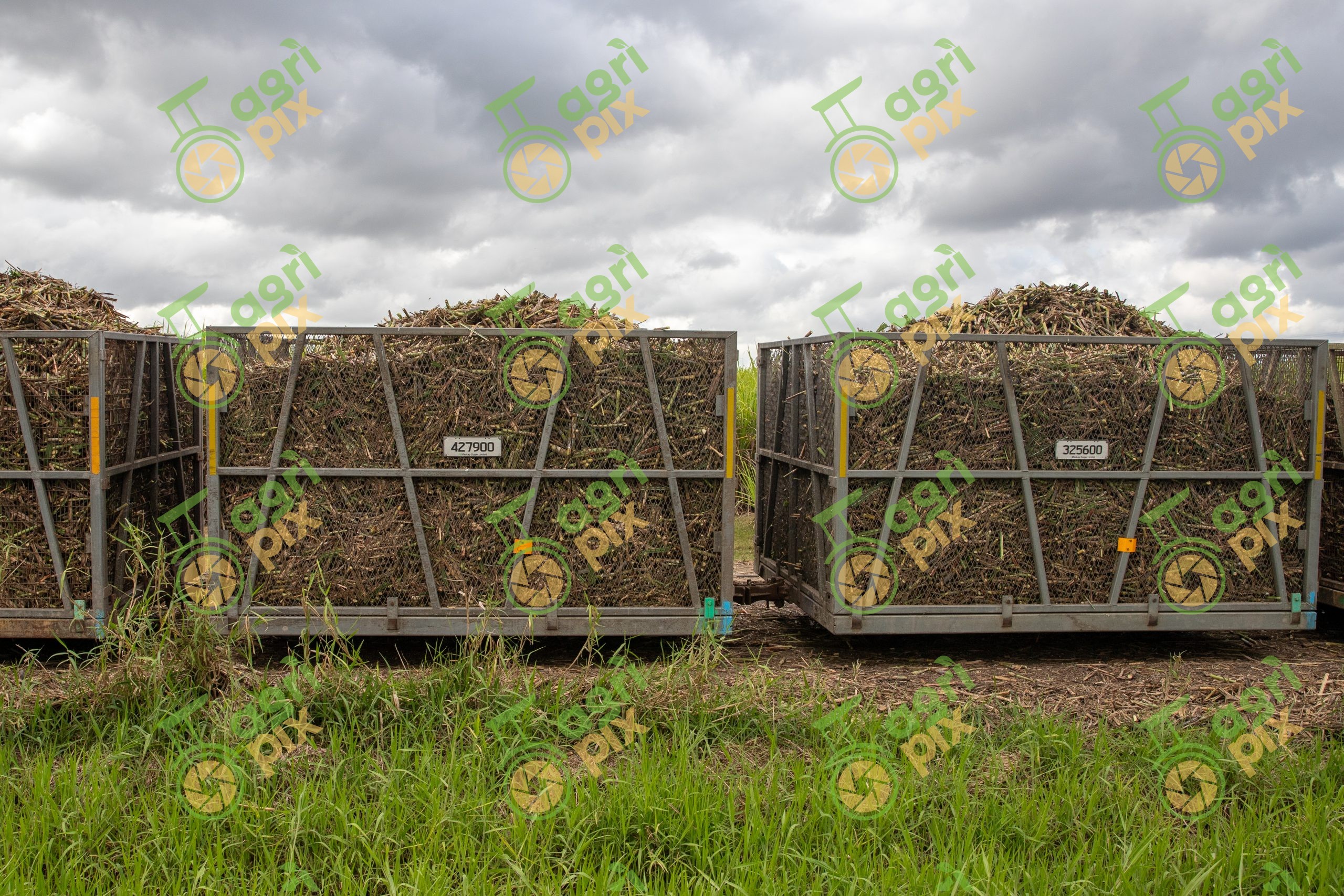
Two fully loaded sugar cane bins stand ready for collection beside a cane field in Queensland, packed with freshly harvested stalks destined for a nearby sugar mill. The steel bins are filled to capacity with cut cane, their contents revealing the fibrous stems that form the foundation of one of Australia's most significant agricultural industries. Dark, rain-laden clouds gather overhead, creating a dramatic backdrop that contrasts with the green grasses and cultivated landscape surrounding the harvest operation. The image captures a familiar scene during the crushing season, when harvested cane is transported from paddocks to mills across Queensland's coastal growing regions. The orderly arrangement of the bins highlights the logistics and efficiency required to move large volumes of cane from field to processing facilities within a relatively short time frame after harvest.
Queensland produces approximately 95 percent of Australia's sugar cane and is home to a network of mills stretching along the state's tropical and subtropical coastline. Cane bins such as these are a critical component of the industry's transport system, carrying harvested cane via dedicated rail networks or collection points to ensure efficient processing and sugar production.
Sugar cane has shaped the economy, communities and agricultural identity of coastal Queensland for more than 150 years. Today, the industry continues to support regional employment, export earnings and the livelihoods of thousands of farming families throughout the state's cane-growing districts.