A Dingo Leesa Baldwin
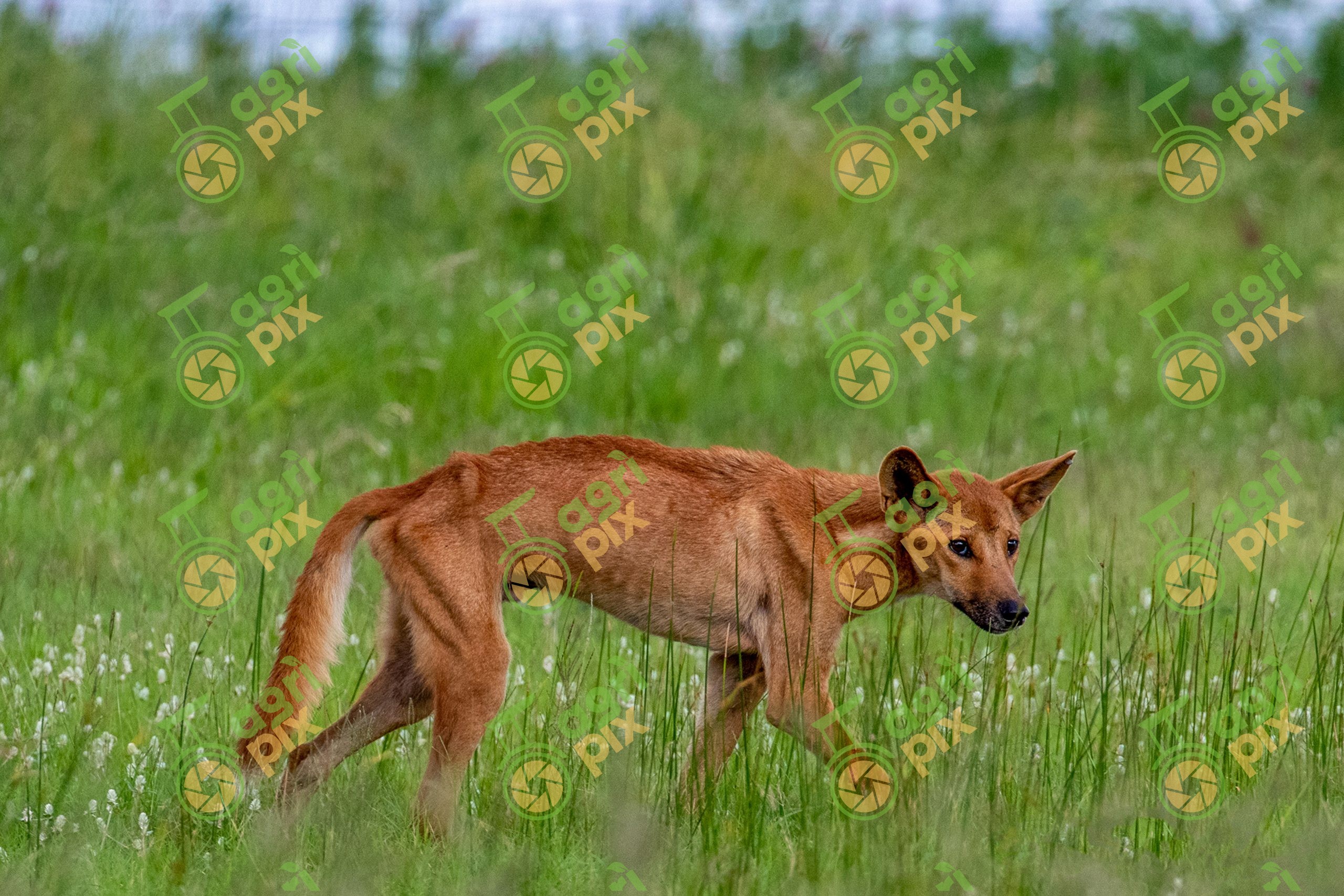
A dingo (Canis dingo) moves quietly through tall grass in Queensland's Central Highlands, its lean frame and alert posture reflecting the instincts of one of Australia's most iconic native predators. The animal's rich ginger coat contrasts against the soft green vegetation, while its focused gaze suggests it is actively assessing its surroundings. Every aspect of the dingo's appearance is adapted for survival, from its long legs and keen senses to its endurance and ability to travel large distances in search of food and territory. Captured in a natural setting, the image highlights both the elegance and resilience of a species that has played an important ecological role across the Australian continent for thousands of years.
The Central Highlands region of Queensland encompasses a diverse landscape of grasslands, woodlands, grazing country and conservation reserves. These varied habitats support a wide range of native wildlife and provide suitable territory for dingoes, which occupy a position near the top of the food chain. As apex predators, they help regulate populations of smaller animals and contribute to ecosystem balance.
For many First Nations peoples, the dingo holds cultural significance and features in stories, traditions and connections to Country. Today, the species remains both admired and debated, reflecting its complex relationship with Australia's natural and agricultural landscapes.